How I do it · Vocal Integration

Your voice.
Your way into change.

Vocal Integration draws on voice physiology and Mr. Wickham’s five years studying directly with Bill Esper at the William Esper Studio. You practice listening closely enough to let the other person change how you respond.

In session, I might ask, “Can we do it by Friday?” Once I need a date. The next time I’m worried about what that deadline will cost the team. I listen for the moment you hear the concern in my question. If your answer has the same pace and emphasis both times, we go back to the words you heard and work from your response.

The technical work starts with the four properties of sound. You learn to hear and control amplitude, duration, frequency, and timbre, then use them in your own conversations and presentations.

Begin with a free micro-assessment

The Vocal Integration approaches

More than one way
into the voice.

Vocal Integration brings listening, understanding, imagination, and physical coordination into the same practice.

A useful vocal change has to become available when you need it. We approach a challenge from several directions, discover what helps you, and carry that learning into speech.

The six approaches give us different ways into the work. They inform your individual training throughout.

Aural Imitation

Listen closely, explore a model, and compare what you hear with what you produce. Develop an ear for distinctions in resonance, rhythm, articulation, and inflection.

Passive Coordination

You practice targeted vocal exercises to isolate and strengthen the individual muscles that produce your voice.

Concept Education

Understand the ideas behind the exercise. Connect the properties of sound to choices you can hear and use, so practice has a clear purpose.

Functional Visualization

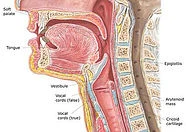
You use a mental image to coordinate your breath, the space at the back of your throat (pharyngeal space), and vocal fold closure. The aim is to find your optimum resonance and train your voice to work efficiently.

Structural Integration

You work directly with the physical tissues involved in speaking, improving flexibility where movement is restricted and easing tension where it interferes with your voice.

Subconscious Recalibration

If your voice goes quiet when someone interrupts, you might start to think, “I can’t hold the floor.” You learn to recognize that automatic response, reprogram the false identity it reinforces, and retrain the confidence behind your voice.

The AAA training cycle

Assess. Assign.
Apply.

The AAA training cycle keeps the work responsive to you. Each application gives us something new to assess.

A01

Assess

We explore your speaking range and ask you to make unfamiliar sounds. We compare the sound waves from one attempt to the next, listen for where the tone changes, and ask where you feel extra effort. Those clues help us narrow down which muscle coordination to test.

A02

Assign

I choose an isolation exercise for the coordination we identified and model the sound in your range. After each imitation I ask where you felt the work. If the vowel is clearer but your jaw is tightening, I change the exercise. Then I listen for the same improvement in a phrase from your work.

A03

Apply

You use the new coordination with another person. I take the part of a colleague who needs a decision, then change the question as you answer. We listen for what carries through the exchange and where the old habit returns. That is where the next assessment begins.

AssessAssignApplyReassess

A micro-lesson from the wider method

Four properties.
A world of expression.

We begin with the four properties of sound. Learn to recognize them, then explore how to control them in your own voice.

Change a property. See and hear the difference.

Intensity & emphasis
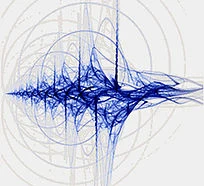
An illustrative waveform showing amplitude
50%
SofterStronger

Explore intensity and emphasis. Learn to vary vocal energy so an important word carries without every word being loud.

“Let us talk it over and find a way out.” Recording credit

The next step is personal

Let the work begin
with your voice.

Send a sample to Mr. Wickham ↗