Hold attention.
Presentations, pitches, and meetings with clearer phrasing, purposeful emphasis, and a voice that carries.
Vocal Integration with Mr. Wickham
A clinically trained voice physiologist, Mr. Wickham specializes in vocal rehabilitation and technical mastery of the speaking voice.
Your training starts with what you need your voice to do. That might mean finding more depth in conversation or keeping your voice clear through the last meeting of the day.
Free micro-assessment with personal feedback by email.
What I do
Vocal Integration builds strength and balance in the muscles you use to speak.
You learn to move through a wider pitch range while keeping the sound full, to add depth without forcing your pitch down, and to speak quietly with enough clarity for the last word to carry.
Designed with male executives in mind. Open to men and women.
Presentations, pitches, and meetings with clearer phrasing, purposeful emphasis, and a voice that carries.
Drawing on Mr. Wickham’s training at the William Esper Studio, you practice hearing the concern in a client’s question and answering it in your own words.
Diction and accent reduction for clearer, more easily understood speech.
A company film gives you twelve seconds for its closing line. I direct the take against the picture, mark where the company name gets swallowed, and change the phrasing so the name lands before the cut.
Monologue work and character construction to explore interpretation, depth, and expressive flexibility.
Speaking ease, coordination, and endurance, including vocal rehabilitation work for speakers.
How I do it
In the studio
Your voice sounds substantial at one pitch, but becomes thin, breathy, or effortful when you move away from it. We explore that boundary through sustained sounds, changes in intensity, and unfamiliar vocal patterns. I compare how your voice responds to different combinations of pitch, vowel, and breath—noting where the sound changes and where you begin recruiting extra effort. Those responses guide the next isolation test.
Passive Coordination exercises target the muscular actions that need development. I select and model the sounds, adjust them to your range, and change the assignment according to your response. Functional Visualization helps bring breath, pharyngeal space, and vocal fold closure into a more efficient relationship. Where physical restriction contributes, Structural Integration addresses the tissue flexibility and tension involved.
We carry that coordination into conversation, presentation, and recorded speech. You work on retaining fullness while speaking quietly, increasing intensity, and moving through a broader expressive range. As the speaking demands change, I listen for the point where the coordination becomes unreliable and return to the relevant technical work.
The aimGreater usable depth, stronger resonance, and more freedom to vary your voice.
You begin a meeting with a clear voice, but gradually need more effort to maintain it. We compare your sound before and after sustained speaking, then investigate the demands separately: duration, intensity, pitch, and phrasing. I assess how your coordination changes as you continue—where breath becomes less manageable, resonance diminishes, or compensatory tension appears.
The exercise sequence follows that pattern of breakdown. We isolate and strengthen the functions that need development, then progressively reconnect them. I adjust the pitch, intensity, duration, and repetition of each assignment to your response. Through Aural Imitation and Concept Education, you learn to recognize both the sound and the physical experience of the coordination we are developing.
We progressively extend the speaking task while monitoring clarity, resonance, effort, and recovery. Prepared material develops into longer explanations and spontaneous exchanges. Asynchronous recordings allow me to hear whether the same coordination is surviving between sessions and revise the assignment accordingly.
The aimMore consistent sound, greater endurance, and less effort throughout the speaking day.
In an exercise, your voice has range, resonance, and authority. In a demanding conversation, it becomes smaller, faster, higher, or rigid. We compare what your instrument can produce with what you automatically permit yourself to use. That distinction helps determine how much of the work belongs to muscular coordination and how much involves an established vocal identity.
Technical exercises establish a wider set of reliable vocal choices. Subconscious Recalibration addresses the habitual responses that prevent you from using them. Drawing on my William Esper Studio training, I direct exchanges that require close listening, a clear intention, and an immediate response. I track how those demands affect your breath, tone, range, and physical tension, then adjust the work.
You use the developing voice in unrehearsed conversation, presentation, and PCC Salon work. The other person’s response changes what you need to do next. We assess whether you can remain vocally flexible and connected while persuading, disagreeing, explaining, or holding your position.
The aimPresence and command that remain available during real interaction.

Hear a distinction.
Explore it in your voice.

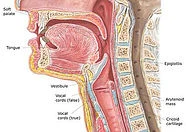
Isolate and strengthen individual vocal muscles.
Understand the work.
Give practice a purpose.

Use imagery to coordinate breath, throat space, and vocal fold closure.

Work directly on tissue flexibility and the tension that limits your voice.

Recognize automatic vocal habits and retrain the confidence behind your voice.
Why I do it
The same words can reassure a colleague, challenge an idea, or bring a discussion to a close.
Pitch, volume, duration, and tone color all shape what a listener hears. Learning to control them gives you a choice about where the emphasis falls. A quiet answer can carry real conviction.
Training options
The recorded micro-assessment is free. Send a sample of your speaking voice and receive personal feedback by email.
Between private sessions
Use submitted recordings and focused feedback to connect independent practice with your training. Submission allowances and response timing are set out in your membership arrangement.
A setting for sharing work and engaging with a creative community. Explore suitable spoken material and participation through the Salon’s current offerings.
Explore PCC SalonPlan individual online or studio lessons and review your membership dues. Open the individual tuition worksheet
Biography
Voice physiology explores how a sound is made. Say “I recommend we wait.” A small rise in pitch on “wait” can make a recommendation sound like a question.
Mr. Wickham studied voice anatomy and physiology at Vanderbilt’s Bill Wilkerson Center and trained for five years with Bill Esper at the William Esper Studio. He later trained as a teacher there and became an affiliate faculty member.
Read the full biographyA few useful answers
No. The program is designed with the needs of male executives in mind and welcomes men and women. Your vocal goals and the choices appropriate to your own voice guide the work.
Depth and resonance can be explored alongside clarity, range, and ease. An initial assessment helps establish appropriate goals for your voice, then practice develops useful choices within your own instrument.
No. You can begin with something familiar, like giving your team an update. If you want to explore a wider range of expression, a monologue gives you room to experiment with pitch, pacing, and emphasis.
Yes. I can come to your office for a session with one executive or a workshop with your team. Tell me your neighborhood, who will participate, and what they need to work on. Inquire for more information
The free micro-assessment includes personal feedback by email. A 60-minute private lesson is $400 online or $500 in studio with BASIC membership. FULL members save $100 on either session. For group training or a company-office visit, contact the studio about your event .
Asynchronous Coaching connects recordings from your independent practice with focused feedback. PCC Salon provides opportunities to share appropriate work. The resources included in your arrangement, submission allowances, and participation details are discussed before enrollment.
Your next chapter
Tell us where your voice takes you—and where you would like it to go.
admin@vocalstudios.comNew York, NY
Private instruction